AI-Powered Cybersecurity: Protecting Businesses Against Modern Threats


AI-Powered Cybersecurity: Protecting Businesses Against Modern Threats
Why AI-Powered Cybersecurity Matters
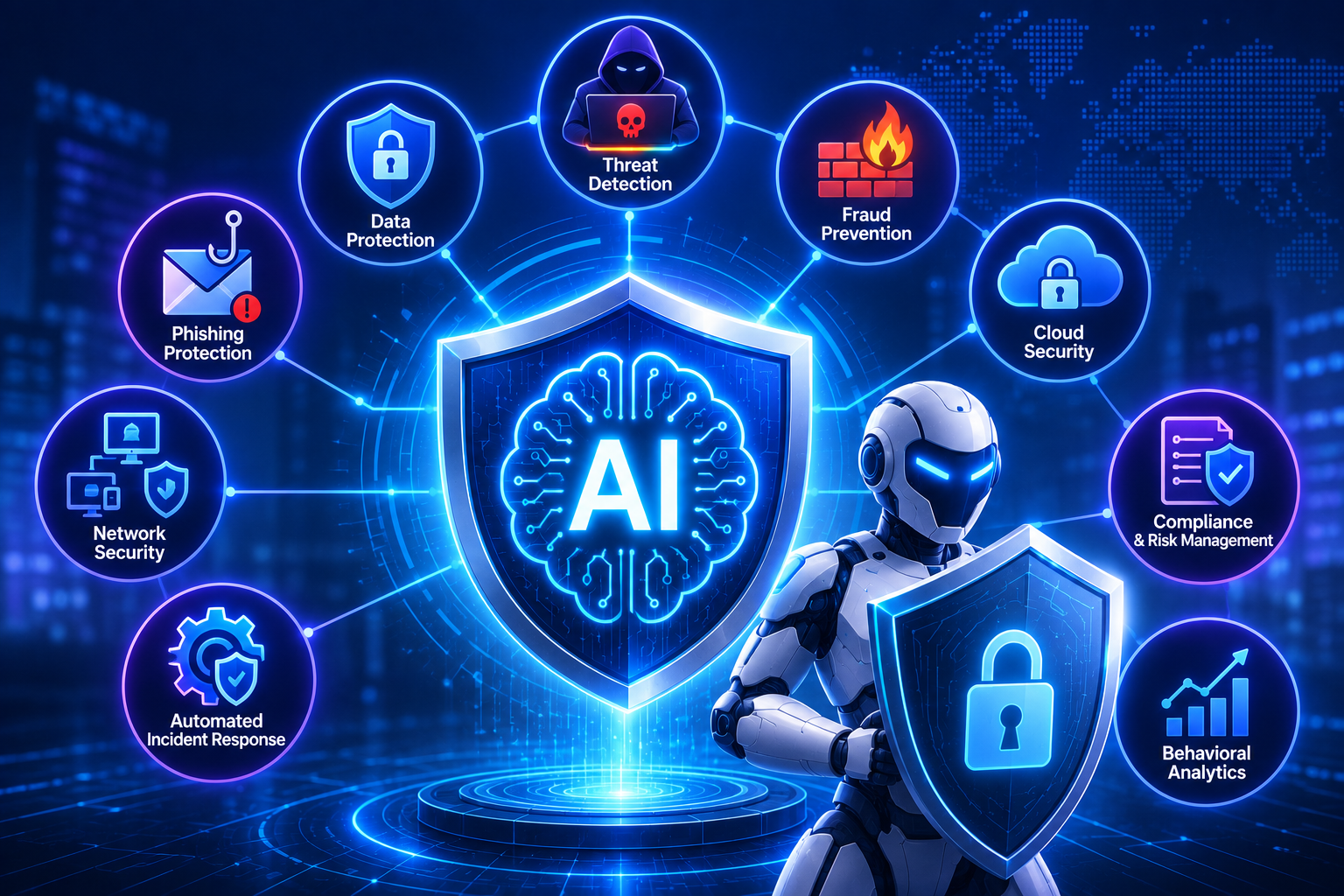
Modern businesses generate massive amounts of digital data every day. From customer information and financial records to cloud applications and IoT devices, every connected system becomes a potential target for cybercriminals. Traditional security solutions often rely on predefined rules, making them slower to detect new and evolving threats. AI-powered cybersecurity changes this approach by continuously learning from data, identifying abnormal behaviors, and responding to threats in real time.
🛡 Real-Time Threat Detection
Detects malware, phishing attempts, ransomware, and suspicious activities instantly.
🤖 Automated Response
Automatically isolates infected devices and blocks malicious users before damage spreads.
📊 Behavioral Analytics
Learns normal user behavior and instantly flags unusual activities.
☁ Cloud Security
Protects cloud infrastructure with intelligent monitoring and automated compliance checks.
Advantages of AI-Powered Cybersecurity
- ✔ Faster threat detection
- ✔ 24/7 continuous monitoring
- ✔ Reduced human errors
- ✔ Automated incident response
- ✔ Better fraud prevention
- ✔ Improved compliance
- ✔ Cost savings in long term
- ✔ Protects sensitive customer data
AI enables organizations to identify cyber threats much faster than traditional security systems. By analyzing millions of events every second, businesses can prevent attacks before they disrupt operations.
Challenges & Disadvantages
- High implementation cost for some organizations.
- Requires quality training data.
- May produce false positive alerts.
- Needs regular AI model updates.
- Cybercriminals also use AI to launch attacks.
- Privacy and regulatory compliance challenges.
Real-World Applications
| Industry | AI Security Use Case |
|---|---|
| Banking | Fraud Detection & Secure Transactions |
| Healthcare | Patient Data Protection |
| E-Commerce | Payment Fraud Prevention |
| Manufacturing | Industrial Network Monitoring |
| Education | Student Data Security |
| Government | Critical Infrastructure Protection |
Best Practices for Businesses
🔐 Multi-Factor Authentication
Enable MFA across all business systems.
📈 Continuous Monitoring
Use AI to monitor networks 24/7.
👨💻 Employee Training
Educate employees to recognize phishing attacks.
The Future of AI-Powered Cybersecurity
As cyber threats continue to evolve, AI will become even more intelligent, predictive, and autonomous. Future cybersecurity systems will identify unknown threats before they occur, automate incident investigations, and provide real-time protection across cloud, mobile, IoT, and enterprise environments. Organizations that invest in AI-driven security today will be better prepared for tomorrow's increasingly sophisticated digital threats.